

Beyond the Industrial Factory Floor: Why Sir Ken Robinson’s Vision Matters More Than Ever in Aotearoa
When I first stepped into the classroom as a fresh teacher, filled with both excitement and the overwhelming weight of responsibility, it was Sir Ken Robinson’s famous 2006 TED Talk, "Do schools kill creativity?", that lit a spark inside me. Hearing him articulate—with such brilliant wit and deep warmth—that modern education systems actively educate children out of their natural creative capacities was a revelation. He gave voice to everything I intuitively felt about children: that they are born curious, inherently creative, and bursting with potential.
That spark turned into a lifelong passion. In his 2010 follow-up speech, "Bring on the learning revolution!", Robinson pushed his critique even further. He argued that we don't need to reform our current model of education—we need a total revolution. He called for a shift from an industrial, command-and-control model of schooling to an organic, human-centred model that customises learning to the unique gifts of every child.
Ever since those early days, I have held tightly to Robinson’s vision as my pedagogical North Star.
My foundation in education began with 15 years in a Reggio Emilia–inspired early childhood centre, grounded in Te Whāriki. That early years curriculum inherently honours Robinson’s learning revolution: it treats the child as a capable, confident researcher of their world, communicating through the "100 Languages" of art, light, movement, clay, and inquiry. Over those 15 years, I didn't just observe the Reggio approach from afar—I completely immersed myself in it. I engaged in countless professional development opportunities across New Zealand, and I even travelled to Reggio Emilia, Italy, to attend their week-long international study tour. Walking through those renowned ateliers and classrooms in Italy, my true passion for the physical environment—the environment as the "Third Teacher"—really took hold. I saw firsthand how meticulously curated, intentional spaces can spark curiosity, invite deep focus, and honour a child’s natural ways of knowing.
Later, as I raised my own children through the primary education system, I gained a deeply personal insight into the primary space—feeling immense gratitude for the strengths of the New Zealand Curriculum (NZC), while also witnessing the subtle shifts that happen as tamariki transition into formal schooling. As a mother, this hit home profoundly: my oldest child is neurodiverse and has been challenged by the rigid structure and narrow expectations of fitting a box that he was simply never built for throughout his entire educational career. Seeing him navigate a system that so often struggles to recognise his strengths only deepened my conviction that Robinson's call for an educational revolution was right.
Over the last couple of years, stepping into primary teaching myself, I have experienced firsthand the lived reality of today's primary classrooms. Standing at the intersection of my Reggio ECE roots, my journey as a parent, and my daily work as a primary teacher, Robinson’s words haven't just stayed relevant—they have hit me with a poignant, urgent clarity. They have caused me to question deeply: In our drive for standardisation and structured outcomes, are we risking the very wonder, agency, and creative inquiry that make learning meaningful for all learners?
Later, as I raised my own children through the primary education system, I gained a deeply personal insight into the primary space—feeling immense gratitude for the strengths of the New Zealand Curriculum (NZC), while also witnessing the subtle shifts that happen as tamariki transition into formal schooling. As a mother, this hit home profoundly: my oldest child is neurodiverse and has been challenged by the rigid structure and narrow expectations of fitting a box that he was simply never built for throughout his entire educational career. Seeing him navigate a system that so often struggles to recognise his strengths only deepened my conviction that Robinson's call for an educational revolution was right.
Over the last couple of years, stepping into primary teaching myself, I have experienced firsthand the lived reality of today's primary classrooms. Standing at the intersection of my Reggio ECE roots, my journey as a parent, and my daily work as a primary teacher, Robinson’s words haven't just stayed relevant—they have hit me with a poignant, urgent clarity. They have caused me to question deeply: In our drive for standardisation and structured outcomes, are we risking the very wonder, agency, and creative inquiry that make learning meaningful for all learners?
The Paradox of Modern Curriculum Mandates
Robinson famously observed that global education systems operate like industrial factories: linear, standardised, and hyper-focused on narrow academic measures. In his view, mathematics and languages sit firmly at the top of the hierarchy, humanities in the middle, and the arts are relegated to the bottom.
Today, as primary schools across Aotearoa navigate updates under Te Mātaiaho (the refreshed New Zealand Curriculum), alongside mandates for structured literacy and explicit numeracy, we face an intense daily tension in the classroom. How do we deliver high-rigour, systematic foundational skills without reverting to the industrial-era drill-and-practice worksheets that Robinson so passionately warned against?
Having spent 15 years immersed in Te Whāriki, where learning is woven organically through relationships and exploration, stepping into the primary sector made this contrast stark. The risk in our current climate is very real: when national conversations lean heavily into standardised metrics, schools can easily succumb to a culture of compliance over curiosity.
Yet, Robinson never argued that literacy or math were unimportant—and neither does a Reggio-inspired philosophy. Rather, he argued that treating them as the only valid measures of intelligence squanders tamariki's potential. Our challenge as modern Kiwi educators is using foundational literacy and numeracy as tools to empower rich inquiry, rather than using them as bars to restrict it.
Intelligence as Diverse, Dynamic, and Distinct
A cornerstone of Robinson’s 2010 talk was his insistence that human talent is immensely diverse and deeply personal. He argued that linear education systems compress human capability into narrow academic boxes, systematically marginalising those who think differently.
One of Robinson’s core arguments was his definition of true human intelligence:
Diverse: We think visually, kinetically, auditorily, and abstractly.
Dynamic: Innovation happens at the interaction of different disciplinary perspectives.
Distinct: Every single child possesses a unique landscape of talents and passions.
He shared the story of Gillian Lynne, the legendary choreographer behind Cats and The Phantom of the Opera, who as a child in the 1930s was nearly labelled with a learning disorder because she couldn't sit still in a traditional classroom. A wise doctor placed a radio on his desk, stepped out of the room, and watched her move. He turned to her mother and said, "Gillian isn't sick; she's a dancer. Take her to a dance school."
In 2026, we still see primary classrooms struggling to accommodate tamariki who do not fit neat, sedentary boxes. Neurodiverse children, experiential thinkers, and kinesthetic learners are far too often asked to regulate themselves into quiet compliance before they are ever permitted to show what they truly know.
Having seen how effortlessly Te Whāriki and Reggio Emilia honour diverse ways of knowing—and knowing firsthand how painful it is when a child is forced into a shape they don't fit—I know that our physical learning spaces must adapt to our children, not the other way around. Tamariki need daily opportunities to express their understanding through Loris Malaguzzi's "100 Languages of Children"—using clay, light, shadow, wire, construction, and digital tools alongside written text.
Re-evaluating the "Fear of Being Wrong"
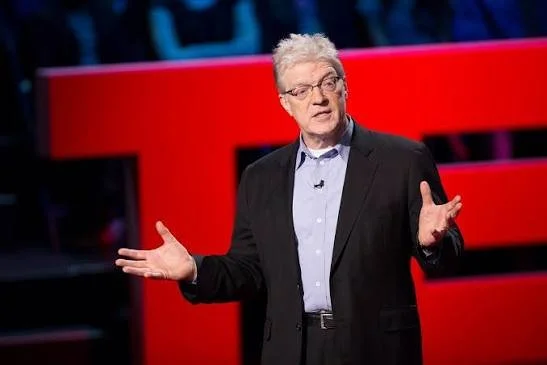
"If you’re not prepared to be wrong, you’ll never come up with anything original."
This principle from his 2006 speech was echoed in The Learning Revolution: real innovation requires creating climate conditions where people are encouraged to try, fail, iterate, and discover. Traditional schooling systems, however, condition children to fear error above all else, penalising mistakes on paper. By the time students reach adulthood, many have lost their innate willingness to experiment or take creative risks because mistakes carry academic penalties.
Raising my own children through the primary system opened my eyes to how early this anxiety can creep in when the emphasis shifts too heavily onto getting the "right" answer. In an age dominated by rapidly advancing technology and shifting global landscapes, the ability to iterate, fail safely, and solve complex, unstructured problems is the single most valuable asset a learner can possess. When classrooms treat trial-and-error as a liability rather than the core engine of scientific and artistic discovery, we disarm our children for the future they will actually inhabit.
From Theory to Practice: Questioning and Reimagining the Primary Classroom
It is easy to applaud Sir Ken Robinson’s speeches, but far harder to build a living, organic alternative within state education systems. How do we create the "micro-climates" Robinson spoke of—environments that foster intrinsic motivation while meeting the explicit requirements of Te Mātaiaho?
This exact question is what led me to establish Kenzie’s Atelier Trust.
Having lived in both the ECE and primary worlds, I knew that Robinson's call for a learning revolution couldn't remain just a beautiful theoretical idea. By bridging the Reggio Emilia approach with the mandates of Te Mātaiaho, we are demonstrating that high-rigour curriculum outcomes and creative inquiry do not belong on opposite sides of the floor:
Treating the Child as a Capable Researcher: Rather than viewing tamariki as empty vessels to be filled with pre-packaged facts, inquiry-led approaches view children as capable, curious investigators testing hypotheses about their world.
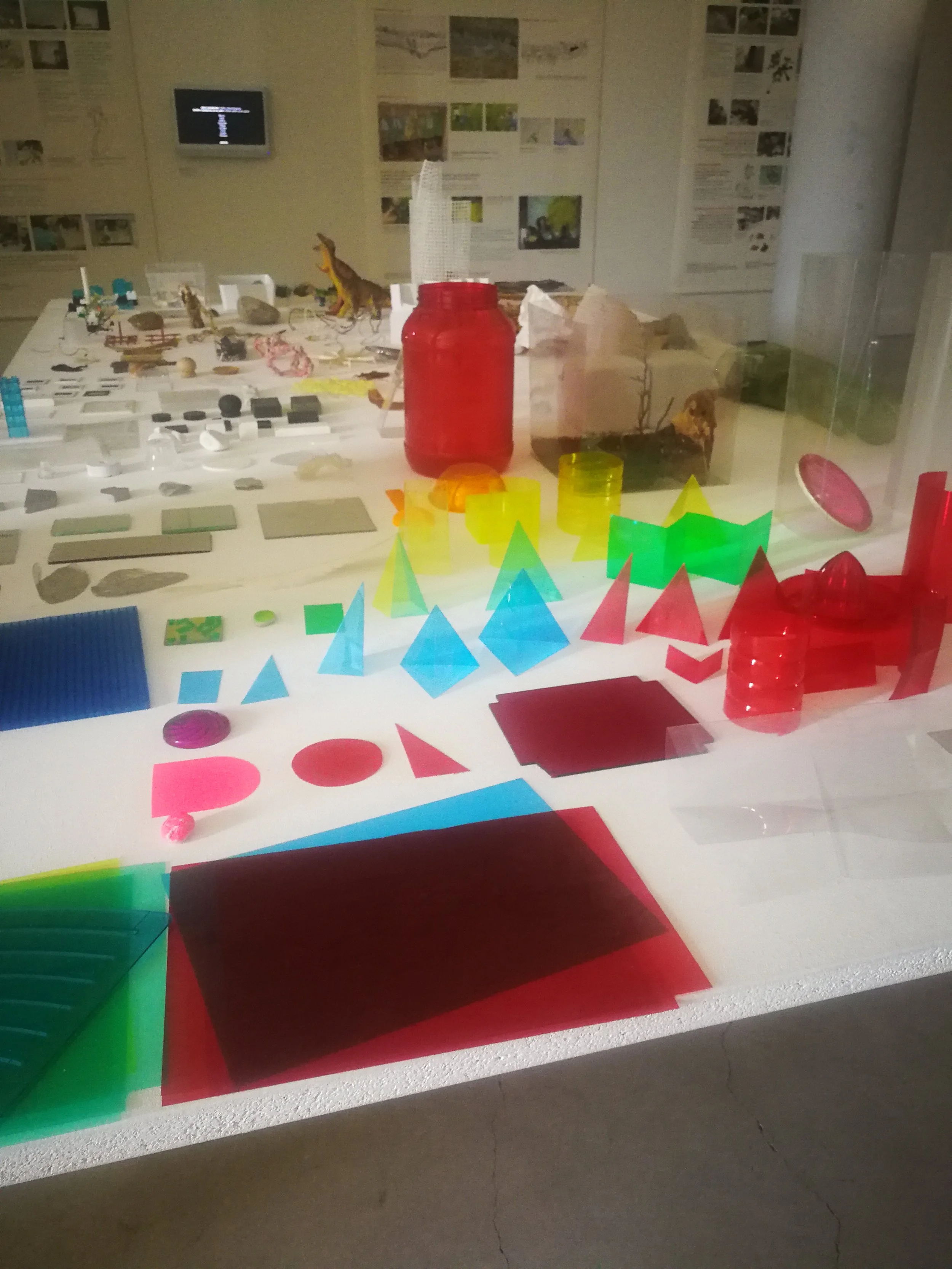
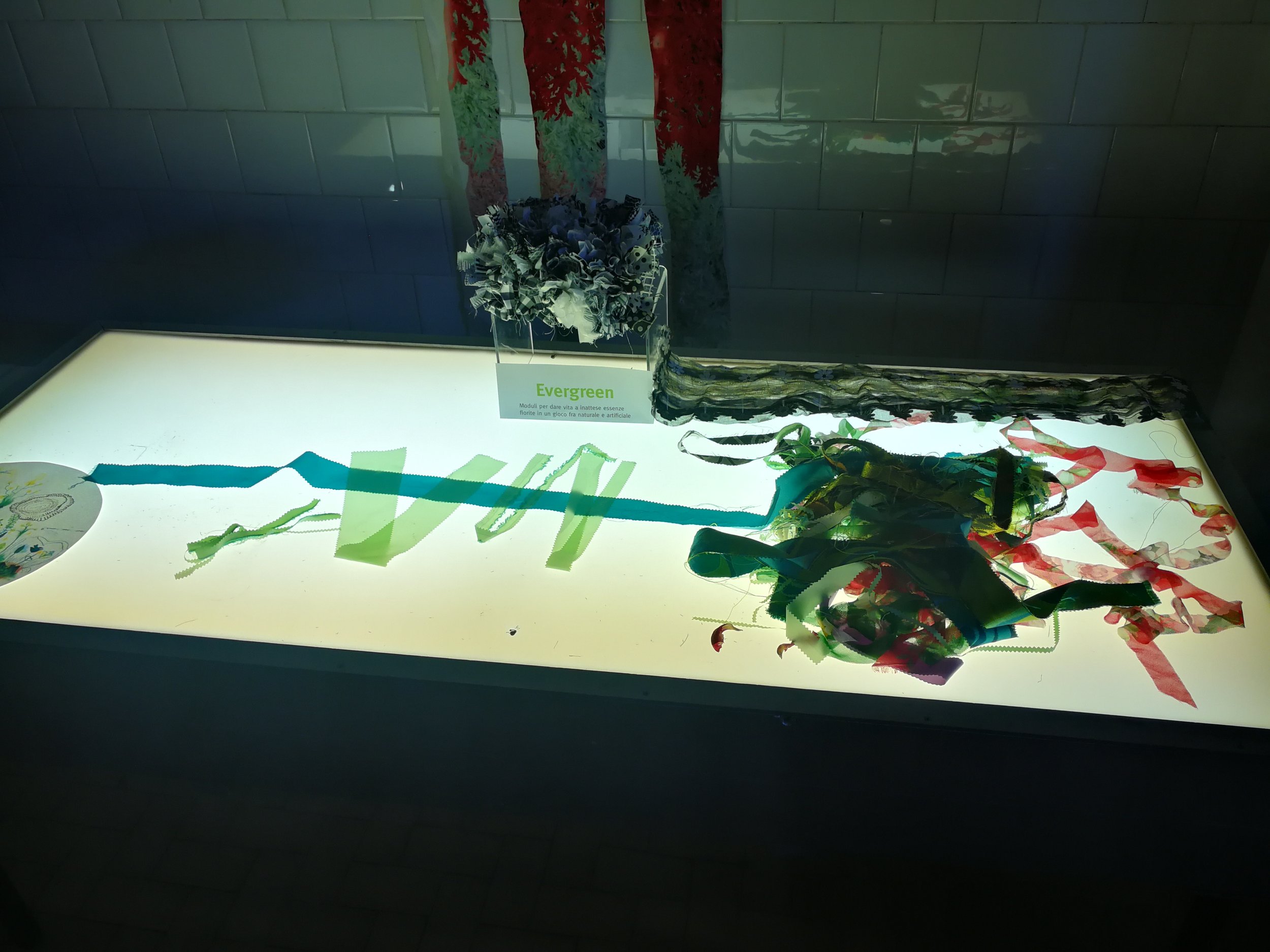
The Environment as the "Third Teacher": We curate spaces with "Intelligent Materials"—raw clay, optics, digital tools, architectural timber, and natural loose parts—inviting deep, uninterrupted problem-solving.
Dissolving Subject Silos: When a child uses a light table to project the geometry of a leaf or presses letter stamps into raw potter's clay, the artificial boundary between structured literacy, spatial mathematics, and visual art disappears.
Revolution, Not Just Reform
Sir Ken Robinson insisted that minor reform is no longer enough because it merely polishes an outdated model. What we need is a fundamental shift in how we value human capacity.
My 15 years in Reggio-inspired ECE under Te Whāriki, my journey as a parent, and my recent years in primary teaching have brought me full circle. They have confirmed that Robinson’s message was not just a passing trend—it was a timeless reminder of what children truly need. Honouring his legacy means rejecting the false choice between academic rigour and creative freedom.
When we design environments that foster beauty, honour diverse ways of thinking, and encourage tamariki to take risks with their ideas, we aren't just teaching—we are starting our own small learning revolutions, right inside our classrooms.
What are your thoughts?
For those teaching or parenting across the ECE and primary sectors, how are you navigating this transition? How do you keep creative inquiry alive while meeting curriculum demands in your school or home? Let’s share our insights in the comments below.
