Papatūānuku’s Atelier — Grounding Literacy, Science, and Kaitiakitanga in Earth’s Multitude
Reflecting on Purpose and Value
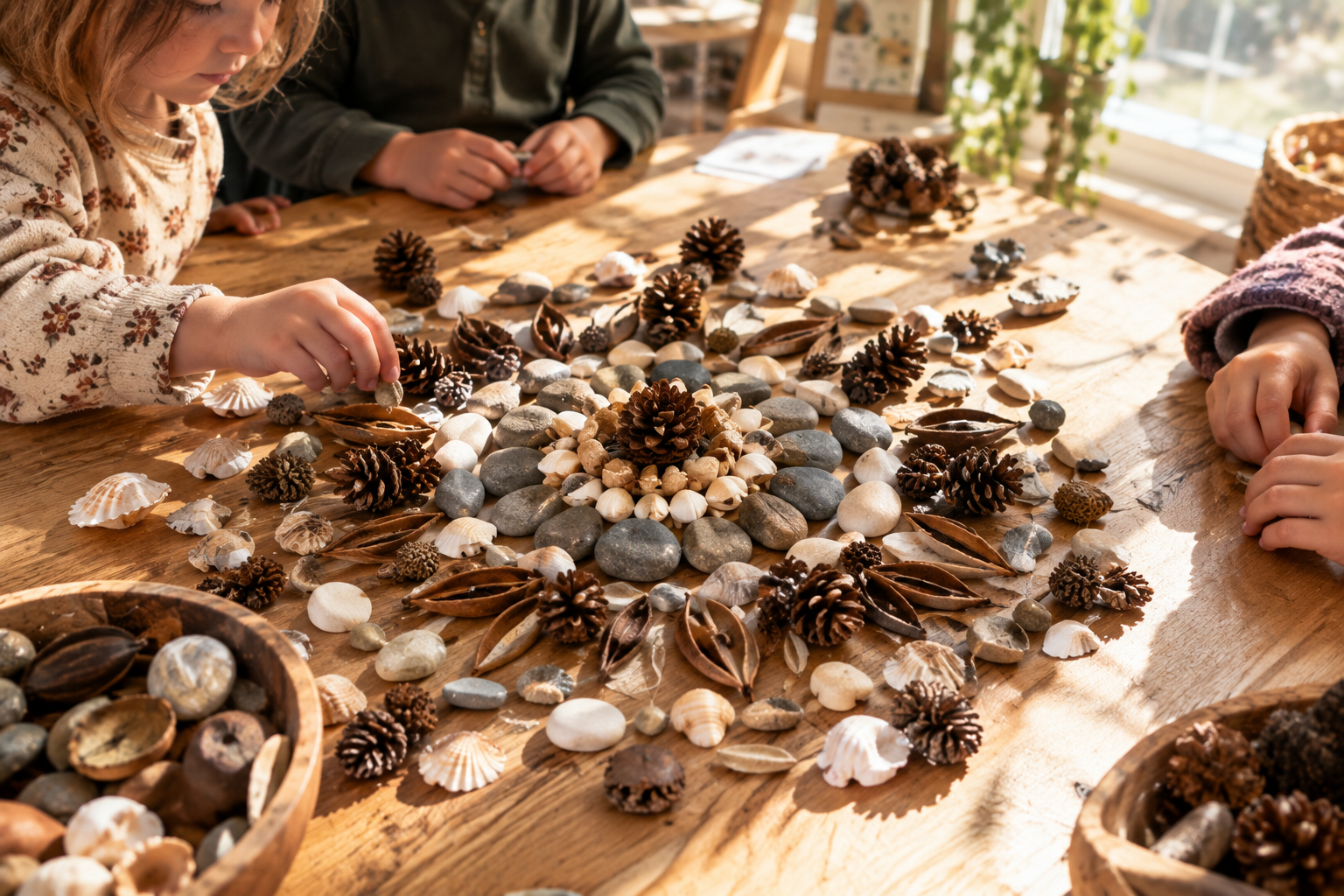
In an increasingly digital world, children hunger for rich, sensory engagement with the living world. Papatūānuku’s Atelier brings a full spectrum of organic materials directly into the learning space—expanding far beyond clay to include living soils, botanical dyes, native flora, mineral pigments, seed/pollen structures, and river sediments.
While raw potter’s clay offers transformative lessons in structural form and hydration, surrounding it with diverse earth elements deepens children’s dynamic connection to nature. This zone honors Kaitiakitanga (guardianship) and Whanaungatanga by grounding inquiry in the earth (whenua). It provides a deeply soothing, regulating environment that fosters emotional well-being while demanding high-level scientific classification, chemical experimentation, and ecological reasoning.
Alignment with Te Mātaiaho (NZC)
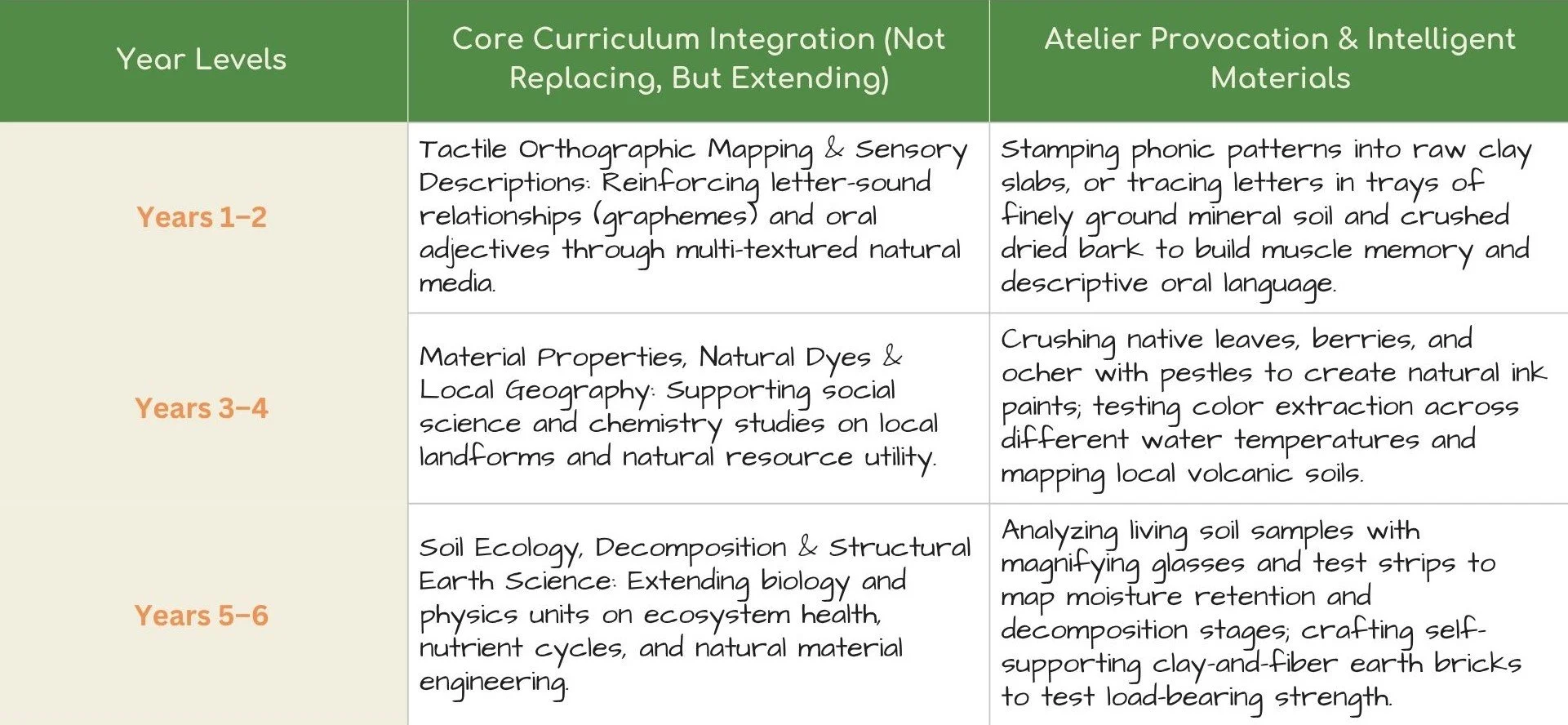
Science (Pūtaiao — Material & Living World): Investigating chemical and physical changes in earth materials (evaporation, pigment extraction, state shifts, soil composition) and observing living ecosystems (Tātai Hono).
Social Sciences (Tikanga ā-Iwi): Deepening connection to place (Tūrangawaewae), understanding how local whenua, natural resources, and seasonal shifts shape community history and ecosystem health.
English (Te Reo Ingarihi — Oral Language & Vocabulary): Generating rich, descriptive sensory adjectives and technical scientific terms (viscosity, pH balance, organic decomposition, botanical extraction, soil porosity) through collaborative earth inquiries.
Weaving It into an Existing Environment
Designate a sturdy table covered with a washable heavy-duty canvas drop cloth. Display diverse earth materials in clear glass jars or shallow wooden trays sorted by tone, texture, and origin: raw clays, crushed ocher pigments, botanical dye baths (boiled onion skins, cabbage, or marigold petals), mortar and pestles for grinding dried flora, and soil observation trays paired with hand lenses.