

What is an Atelier? Unlocking the Power of the "Third Teacher" in Aotearoa
If you were to translate the word atelier from its original French, you would get a simple definition: an artist’s workshop or studio.
However, step inside a Reggio Emilia-inspired educational space, and you quickly realise that an atelier (pronounced ah-te-lyay) is far more than just an art room. It is a sanctuary of wonder, a materials science laboratory, a language hub, and a testing ground for life’s big questions.
In the world of progressive primary education, the atelier is where children don't just learn about the world—they research it.
The Philosophy: The Child as a Researcher
Originating in the northern Italian town of Reggio Emilia following World War II, the Reggio Emilia approach completely transforms how we view education. Founded by visionary educator Loris Malaguzzi, this philosophy rejects the idea that children are empty vessels waiting to be filled with facts.
Instead, it views every child as rich, curious, and infinitely capable of constructing their own understanding.
Malaguzzi famously spoke of the "100 Languages of Children." Tamariki do not express their intelligence solely through the written or spoken word. They communicate, test hypotheses, and solve complex problems using a hundred different languages:
Raw potter's clay and natural earth
Light, shadow, and optical reflection
Wire, timber, and spatial construction
Graphic marks, charcoal, and ink
Movement, music, and dramatic inquiry
An atelier is intentionally designed to give those 100 languages a voice.
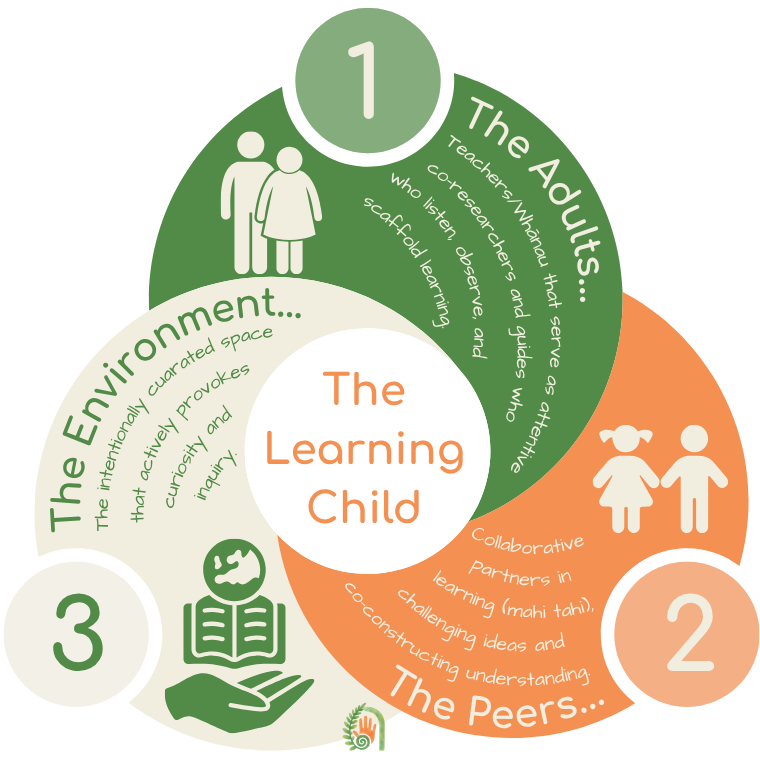
In an atelier, the environment itself acts as the "Third Teacher." Every jar of botanical dye, every light table, and every piece of architectural timber is intentionally placed to provoke curiosity, invite deep focus, and spark collaborative problem-solving (mahi tahi).
Bridging Play with Academic Rigour in New Zealand Primary Schools
A common myth is that an atelier is merely a space for "free play" or passive art making. In reality, it is a high-rigour pedagogical laboratory.
As New Zealand primary schools navigate updates to Te Mātaiaho, alongside mandates for structured literacy and explicit numeracy, teachers face an intense daily challenge: How do we deliver foundational skills without resorting to industrial-era worksheets?
The atelier provides the answer by bridging structured learning with hands-on inquiry:
1. Tactile Structured Literacy
Before a child can master reading and writing, they must understand that a symbolic mark carries meaning. In the Mark-Making Atelier, children press graphemes into raw clay or trace letter paths in natural sand, using kinesthetic memory to strengthen orthographic mapping.
2. Live Spatial Mathematics
When a child works in the Kinetic Atelier to construct a balanced tower using pulleys and spirit levels, they are not just playing—they are actively measuring, calculating angles, and testing geometric balance in real time.
3. Inclusion and Neurodiversity
Traditional classrooms often demand that children sit still at desks before proving what they know. The atelier offers a sensory-rich environment where neurodiverse learners, kinesthetic thinkers, and experiential learners thrive by showing their knowledge through physical creation.
Bringing the Atelier Concept to Your Classroom or Home
Setting up an atelier does not require a massive budget or a brand-new building. It begins with a shift in perspective:
Strip Back Visual Noise: Reduce overstimulating commercial posters and replace them with natural light, neutral tones, and displays of children’s actual work.
Introduce Open-Ended Materials: Swap or enhance single-use toys with "loose parts"—river stones, cardboard architectural tubes, timber offcuts, and raw clay.
Treat Dialogue as Data: Listen closely to children as they work. Scribe their exact quotes, photograph their processes, and use their observations to map their progress against curriculum goals.
The Vision for Aotearoa
An atelier is ultimately a statement of respect. It tells our tamariki that their ideas matter, their questions are valid, and their capacity to research the world is limitless.
Through Kenzie’s Atelier Trust, our mission is to make this transformative approach accessible to every Kiwi educator, school, and whānau—providing open-access templates, practical setups, and inspiration to ensure that beauty, wonder, and academic excellence belong hand-in-hand in Aotearoa education.
How do you bring creative inquiry and hands-on discovery into your classroom or home? We’d love to hear your thoughts and experiences in the comments below!
