

Beyond Worksheets: How the 4 Zones of Inquiry Bring Te Mātaiaho to Life in the NZ Primary Classroom
Take a moment to step back and reflect on your classroom. In an era dominated by structured literacy mandates, explicit numeracy progressions, and refreshed curriculum frameworks, teachers across Aotearoa are facing immense pressure. The daily tension is real: How do we meet the rigorous demands of Te Mātaiaho without turning our primary classrooms into sterile, worksheet-heavy assembly lines?
At Kenzie’s Atelier Trust, we believe creative wonder and academic rigour do not belong on opposite sides of a divide. They belong together. On my own personal journey as a teacher I have discovered that this particular belief is deeply engrained within my teaching philosophy too.
By translating the Reggio Emilia ethos—where the environment acts as the "third teacher"—into 4 Specialised Zones of Inquiry, we can uphold the 100 Languages of Children while delivering high-rigour curriculum outcomes.
Here is a guide to the four zones, how they map to Te Mātaiaho, why this environmental transformation is vital for our tamariki, and how you can seamlessly weave them into your existing classroom setup without a massive budget.
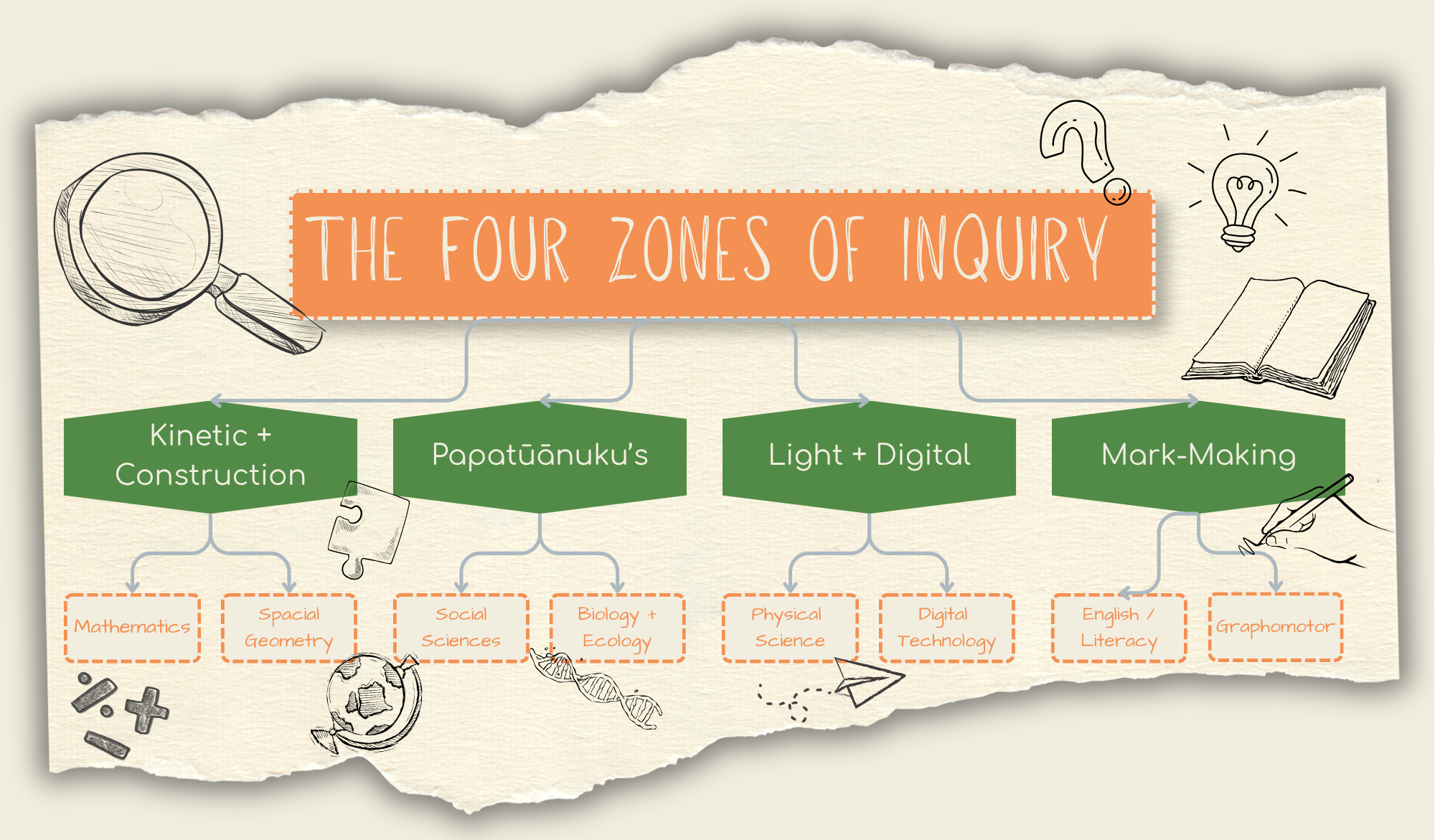
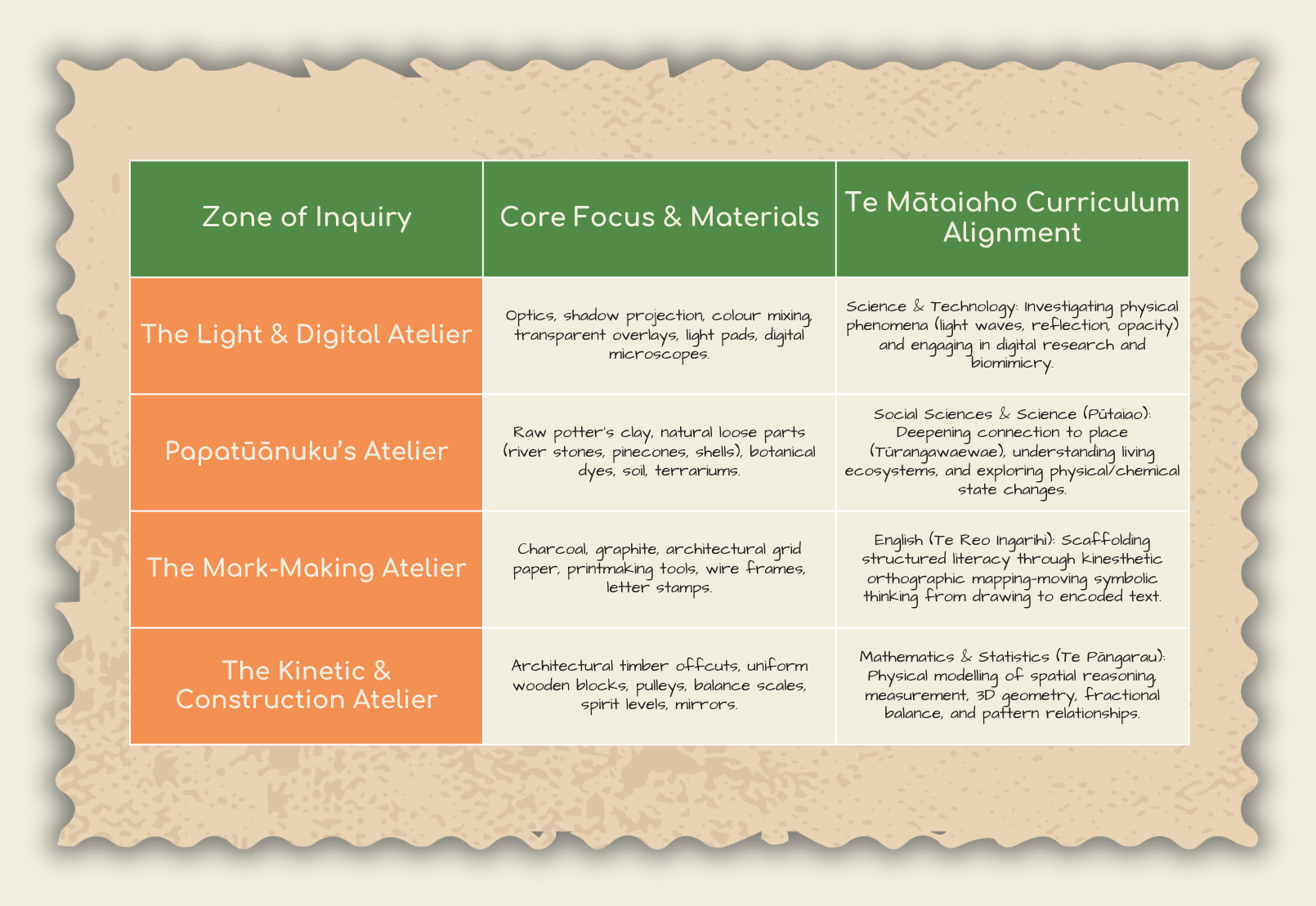
1. The 4 Zones of Inquiry & Their Links to Te Mātaiaho
Rather than traditional, cluttered subject "corners" packed with commercial plastic, the Atelier framework divides the learning environment into four neutral, high-spec studio zones. Each zone acts as a physical laboratory for active research.
2. Why We Must Make This Shift (The Pedagogical "Why")
Bridging Play with Academic Rigour
Abstract concepts in math and science are difficult for young minds to grasp purely on paper. When a child manipulates translucent geometric shapes on an illuminated light table, they are not just "playing"—they are visually discovering spatial symmetry, fraction footprints, and angle transformations. Hands-on inquiry anchors abstract theories into tangible understanding.
Supporting Neurodiverse and Multi-Modal Learners
Traditional classrooms rely heavily on text-based output. If a child struggles with pencil grip or phonological processing, standard desk work misrepresents their true intelligence. Grounded in Loris Malaguzzi's vision of the 100 Languages, these zones allow children to demonstrate complex scientific or mathematical theories through clay, wire, light, or architectural construction.
Building Fine Motor Foundations for Literacy
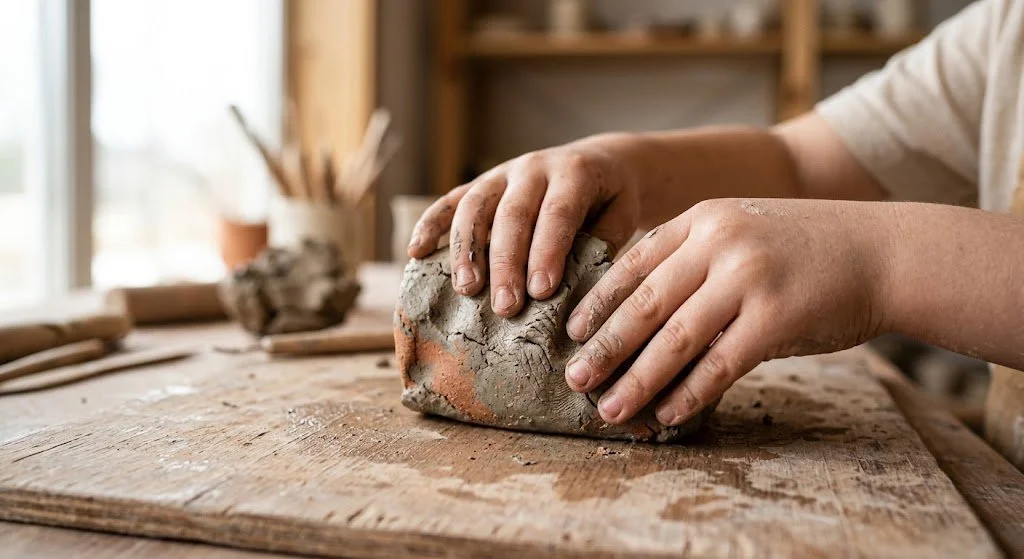
In Papatūānuku’s Atelier, raw potter’s clay provides physical resistance that soft, commercial playdough cannot match. Working with dense clay builds hand strength, finger isolation, and wrist stability—the physical foundation required for proper pencil grip, fluent writing, and hand-eye coordination.
3. How to Weave the 4 Zones Seamlessly into a Standard NZ Classroom
You do not need an open-plan, newly built school or a multi-thousand-dollar budget to implement this framework. You can transform a standard NZ primary classroom step-by-step:
Step 1: De-clutter and Neutralise the Visual Environment
Traditional primary rooms often suffer from visual noise—bright primary-coloured bins, commercial posters, and fluorescent lighting.
Action: Turn off overhead fluorescent lights where possible and introduce warm, domestic lamps in your studio zones. Use neutral backings (hessian, calico, or warm grey paper) on display boards to reduce cognitive overstimulation and help tamariki focus deeply.
Step 2: Establish Low-Cost Physical Anchor Footprints
Map out small, clear sub-zones within your existing furniture layout.
Light & Digital: Set up a home projector facing a blank wall space alongside two low-cost A4 LED light pads.
Papatūānuku’s: Cover a bank of desks with a heavy-duty canvas drop cloth. Store 10kg blocks of raw grey potter's clay in sealed plastic bins, paired with wooden boards.
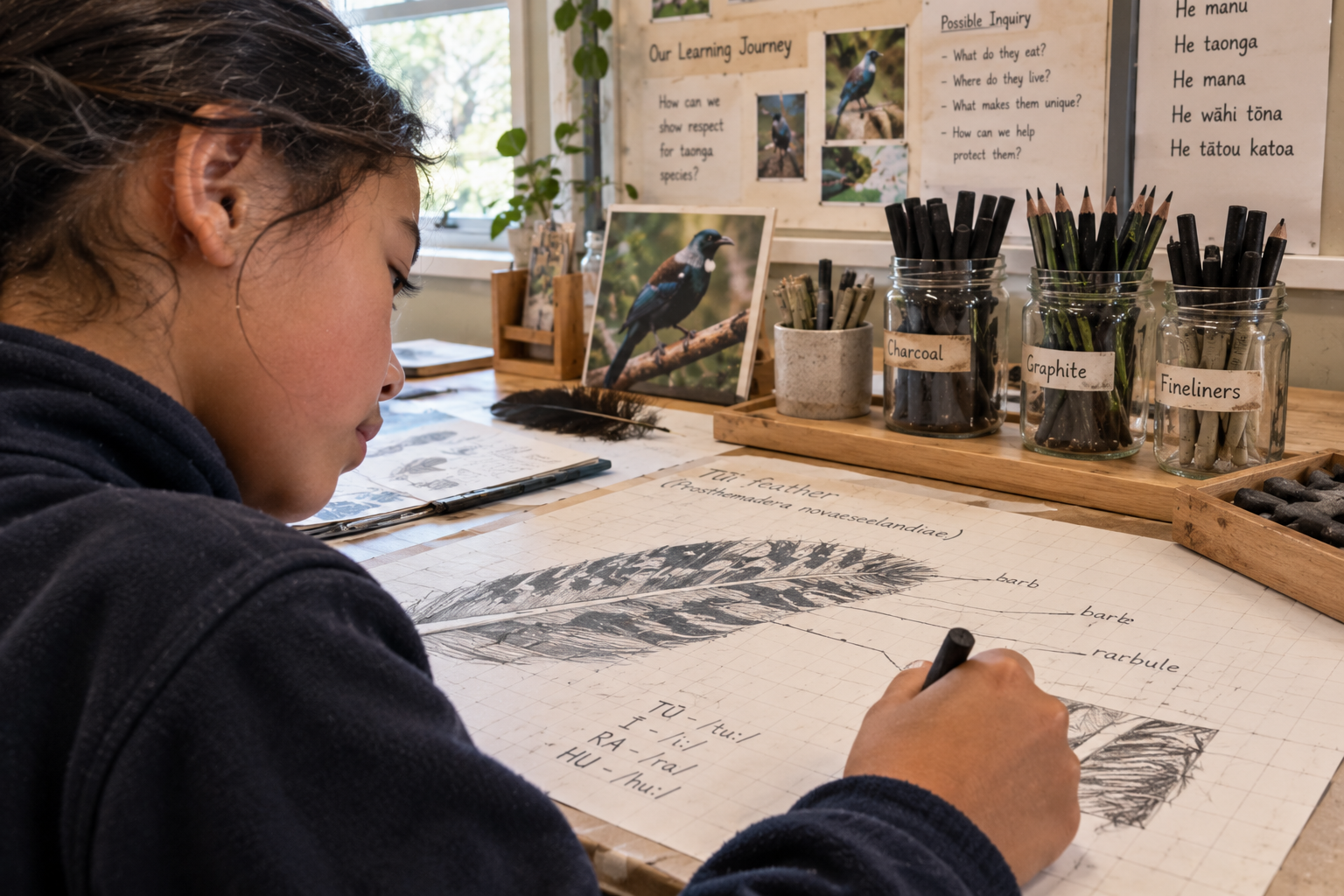
Mark-Making: Replace pre-packaged worksheets with architectural grid paper, heavy cartridge sheets, charcoal, and alphanumeric stamps arranged in glass jars.
Kinetic & Construction: Place a neutral mat on the floor to define building space and absorb sound, supplied with smooth wooden blocks, spirit levels, and tape measures.
Step 3: Source "Intelligent Materials" Free from the Community
Rather than buying commercial plastic toys, launch an Intelligent Materials Community Drive. Send a call-out to whānau and local businesses for:
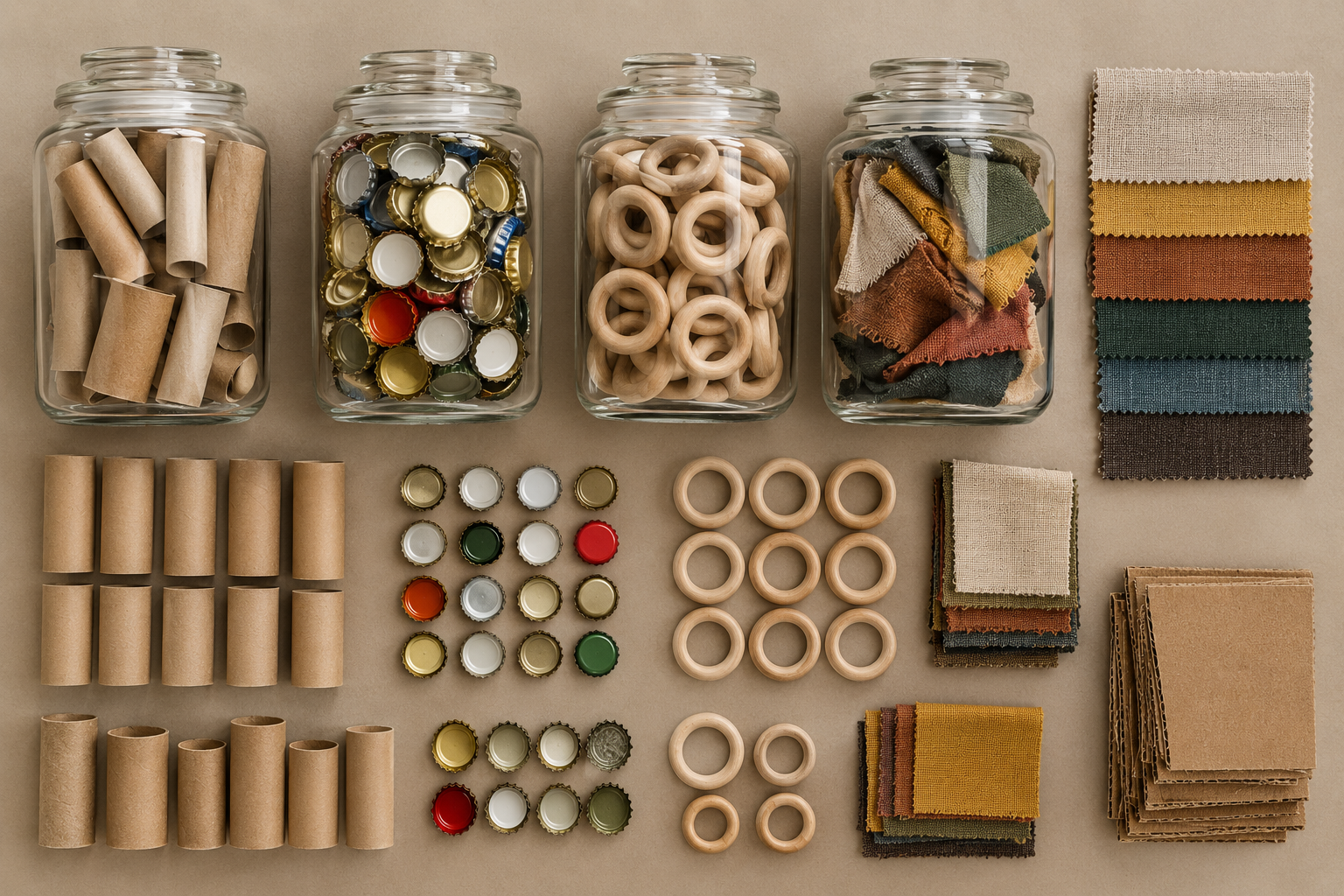
Industrial Offcuts: Clean cardboard tubes, carpet swatches, architectural tile samples, timber offcuts.
Natural Loose Parts: Smooth river stones, dried seed pods, pinecones, seashells.
Household Scraps: Clean glass jars, corks, old keyboards, desk lamps with warm bulbs.
Step 4: Utilise "Pedagogical Documentation" for Assessment
To link this child-led inquiry directly to Te Mātaiaho outcomes during Classroom Release Time (CRT) or inquiry rotations, create Documentation Panels.
Mount a black-and-white photo of a child’s hands working in a zone, scribe their exact dialogue verbatim, and attach a label referencing the specific Te Mātaiaho progress outcome (e.g., Te Pāngarau - Measurement & Geometry). This turns student research into concrete, diagnostic data for reporting and ERO reviews.
The Future of Inquiry in Aotearoa
By treating the environment as the third teacher and our tamariki as capable researchers, we prove that beauty, wonder, and academic performance can thrive side-by-side.
Bringing the 4 Zones of Inquiry into your classroom isn't about throwing out structured learning—it is about providing 100 different doorways for every child to access it.
Join the Movement
Interested in transforming your classroom environment or exploring our low-cost setup blueprints? Follow along as I use my own Primary School Classroom as the Pilot for this transformation. I will be sharing the wins, the losses and everything in between. As a teacher, I intend to continue reflecting on and learning from my practice for the rest of my career (as soon as I feel like I know everything then I should probably quit), so this blog series is my way of sharing my journey with you, and inviting and inspiring you to enter into your own journey alongside me. Lets re-shape the way our tamariki learn together.
You can also explore our digital resource hub and join our community of educators at Kenzie’s Atelier Trust. Together, let's keep the ninety-nine languages alive.
